By Adrián Chacón, AIJU Technological Institute
Within the framework of the PROSPER project, a preliminary study in Spain (with 438 participants) has been conducted under a task aimed at assessing user acceptance and interest in new waste management solutions for bio-based plastics. This activity seeks to collect both quantitative and qualitative data to evaluate sustainability acceptance, perceptions of environmental impact, and the perceived advantages of the proposed solutions compared to existing alternatives for the circular management of these materials. The results presented correspond to the first evaluation phase (M12–M24), focused on identifying initial user requirements, and should therefore be considered preliminary.
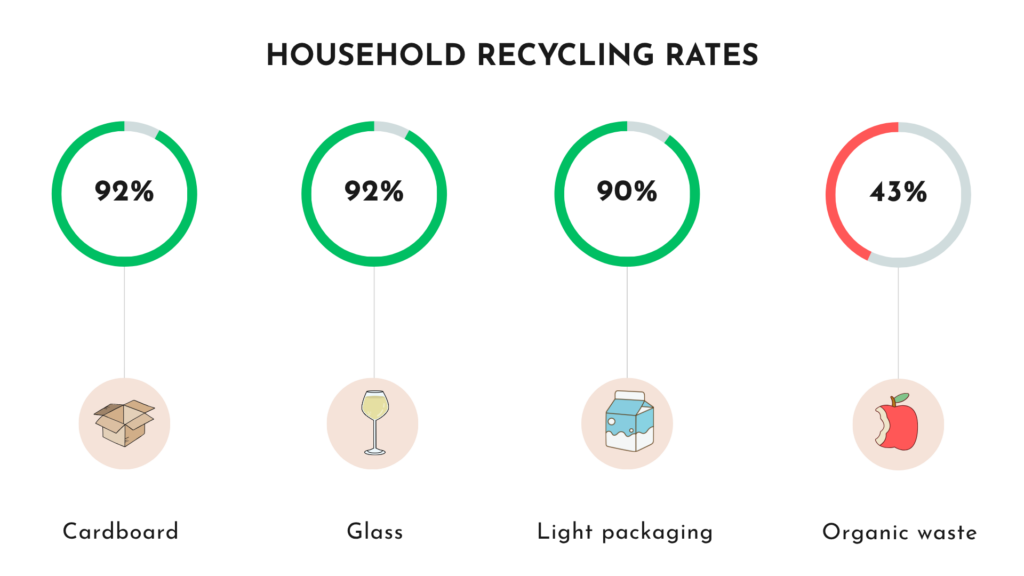
The initial findings show very high household recycling rates for conventional waste streams, such as paper and cardboard and glass (92%), as well as light packaging (90%). These results confirm a high level of citizen engagement and familiarity with established recycling systems.
However, lower recycling levels are observed for more specific waste fractions, such as organic waste (43%), along with limited awareness of key certifications for bioplastics, including OK Compost Home (19%) and the Seedling label/EN 13432 (7%). These findings highlight the need to strengthen both infrastructure and public awareness regarding newer materials such as bio-based plastics.
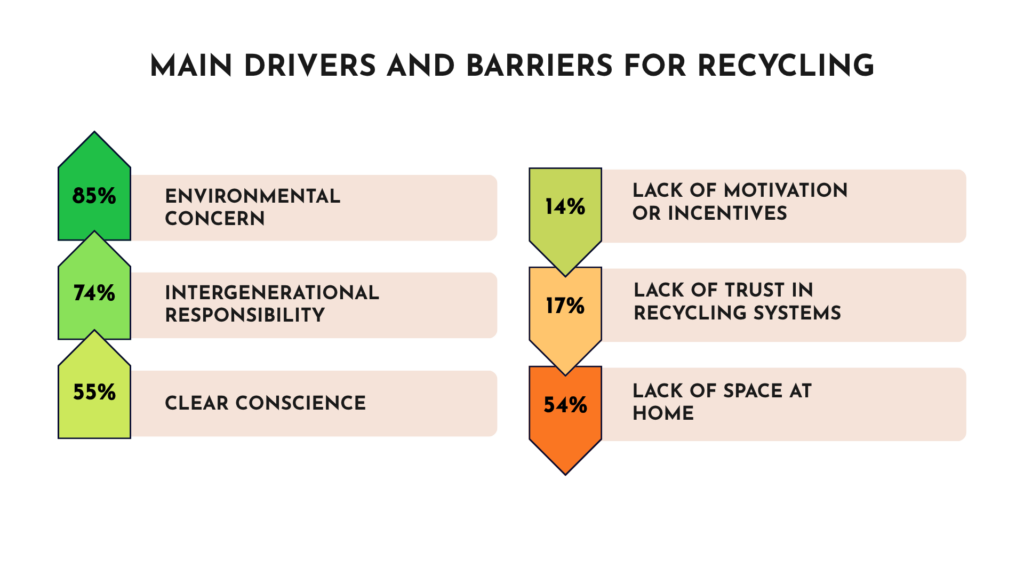
In terms of motivation, recycling behaviour is primarily driven by environmental concern (85%) and intergenerational responsibility (74%). This suggests that future communication strategies should focus on environmental benefits and long-term sustainability aspects of bio-based plastics.
The study also identifies relevant practical barriers, with lack of space at home clearly emerging as the main obstacle to improved waste sorting (54%). This underlines the importance of designing solutions that are realistic and compatible with current household conditions.
Regarding potential new solutions, the idea of introducing a dedicated waste container for bioplastic packaging receives generally positive interest. However, its successful implementation will depend on clear communication, ease of use and system design.
Finally, respondents show a strong preference for solutions that combine convenience and incentives, such as deposit-return schemes, shop-based collection points and smart bins with reward systems. While environmental values remain the primary driver, these mechanisms could further enhance participation and improve collection rates.
Overall, these preliminary results indicate that while household recycling is well established for conventional waste streams, significant challenges remain for bio-based plastics, particularly in terms of knowledge, infrastructure and adaptation to everyday living conditions.
Following this preliminary phase, the questionnaire will be refined based on these findings, as well as feedback from project partners and the Advisory Board. A large-scale survey will then be conducted across six European countries (Spain, Belgium, Italy, Germany, the Netherlands and France), targeting key population groups including families (with and without children), youngsters and elderly people. The study will involve 800 participants per country, reaching a total of 4,800 respondents, ensuring robust and representative insights at European level.