The project
Demonstrating the technical and financial viability of recycling Bio-Based and biodegradable Plastic Packaging
Bioplastics include plastics which are biodegradable in controlled and measurable environments, and which are made from feedstocks that are usually, but not always, renewable or from plant-based sources.
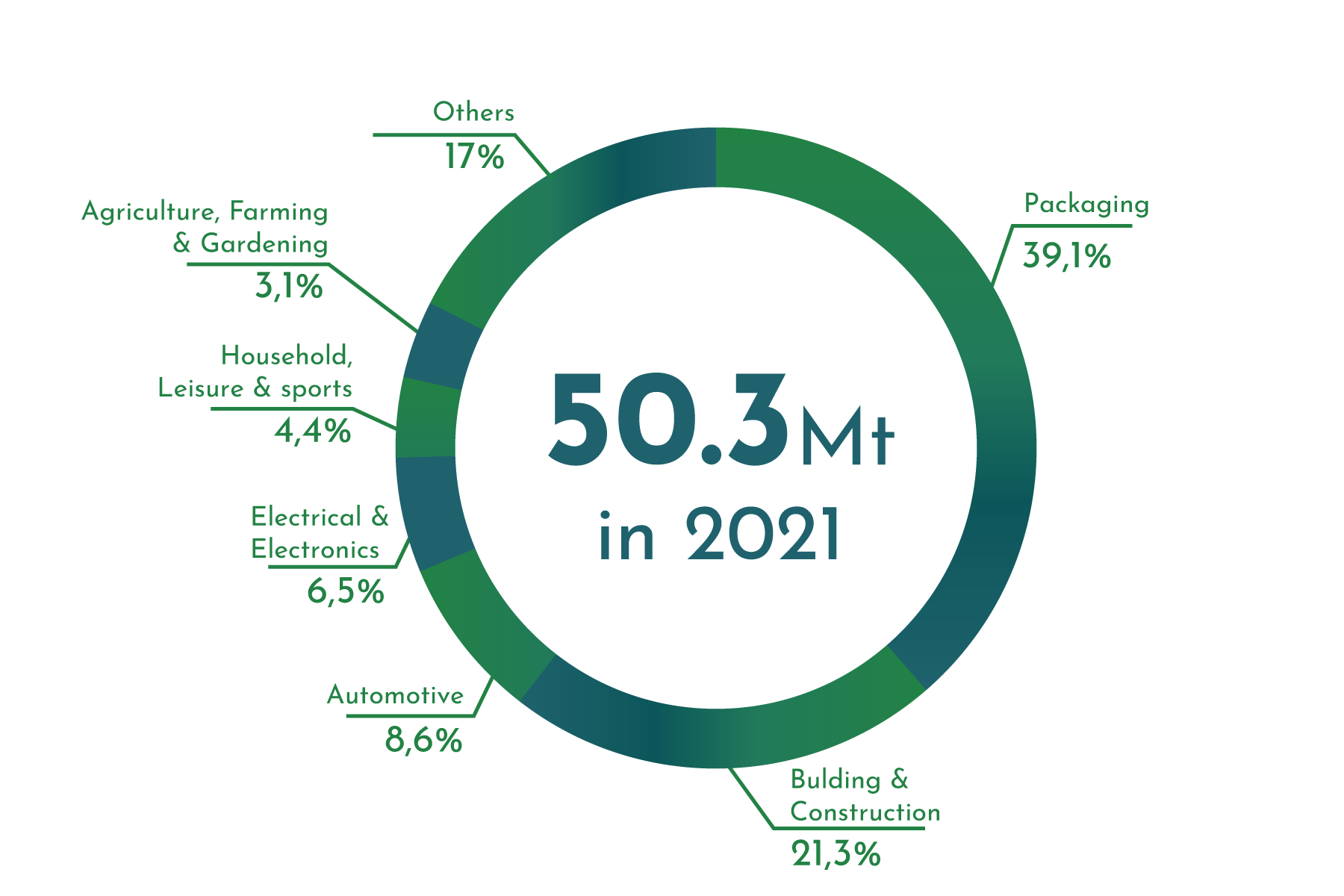
The global production and consumption of bioplastics, as defined here, accounts for approximately 1% of global plastics production and consumption.
As public and political concern grows over the climate impact and littering of plastics, and as technologies allow for the use of
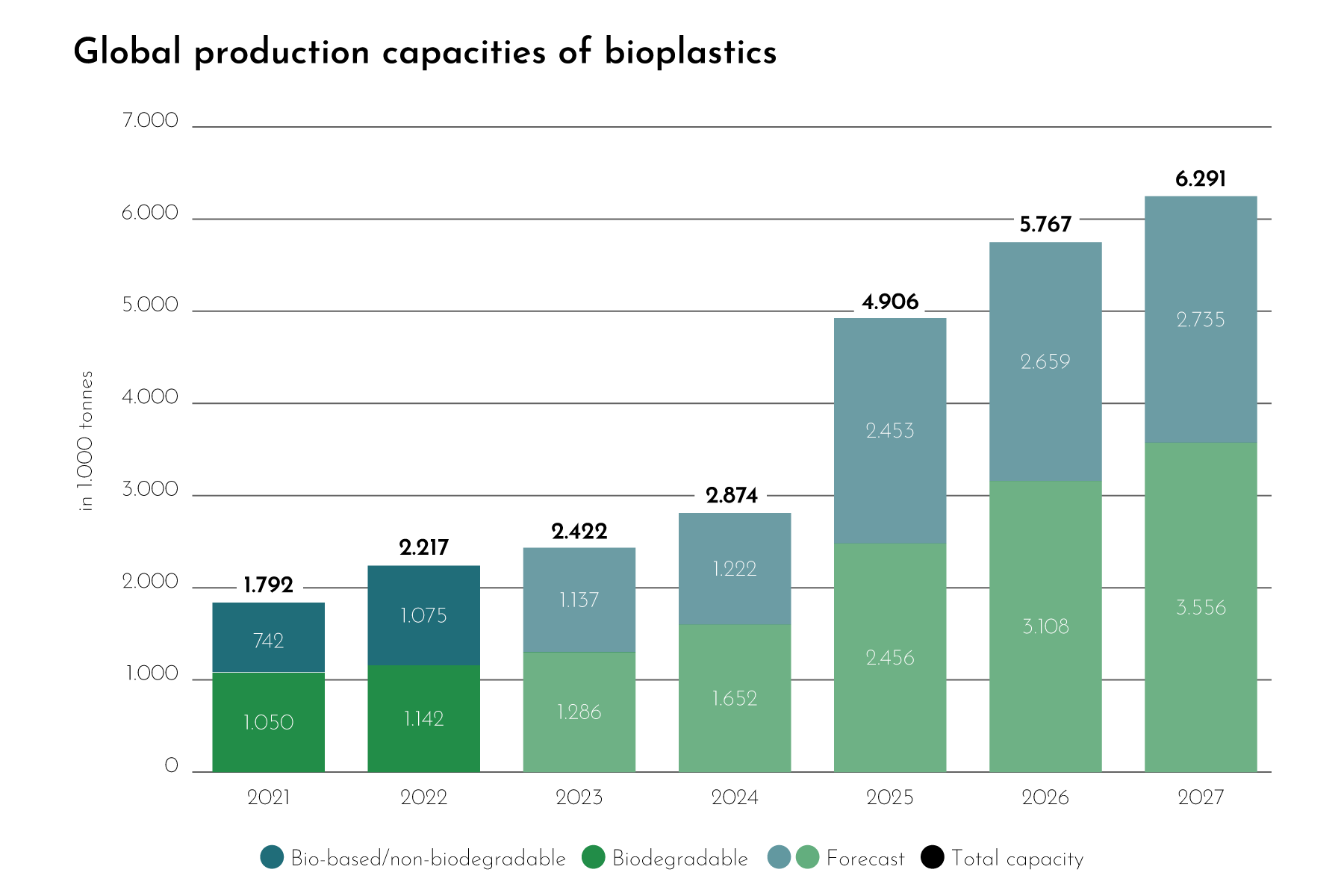
renewable, plant-based, and waste-based feedstocks to create plastics, the global production of bioplastics is on the rise.
The context
Bioplastics production and European consumption
Despite their potential benefits, effective valorization of bioplastics after use is essential to fully realize their environmental advantages.
This can be achieved through co-collection with organic waste for composting or anerobic digestion or, in the case of packaging, through mechanical or chemical recycling, which requires separate collection and sorting of the waste.
However, the quantities of bioplastics entering waste streams are very small, which poses a significant challenge for separate sorting and recycling. The limited volumes do not justify investments in specialized sorting facilities.
Therefore, the ambition of PROSPER is to demonstrate a successful
solution of technically feasible and affordable bio-based plastic sorting and recycling infrastructure and consequently affordable and realistic EPR fees.
The project aim
Prosper covers the entire value chain of bio-based plastics sorting and recycling
PROSPER aims to revitalize bio-based plastics in the packaging market by demonstrating complete value chains for circular bio-based plastics.
The initiative will focus on proving and minimizing the actual costs associated with collecting, sorting, and recycling these materials, ultimately leading to the calculation of Extended Producer Responsibility (EPR) fees.
It will demonstrate a system to achieve a Technology Readiness Level (TRL) of 7 by establishing pilot programs in partner countries to sort, and chemically and mechanically recycle bioplastics.
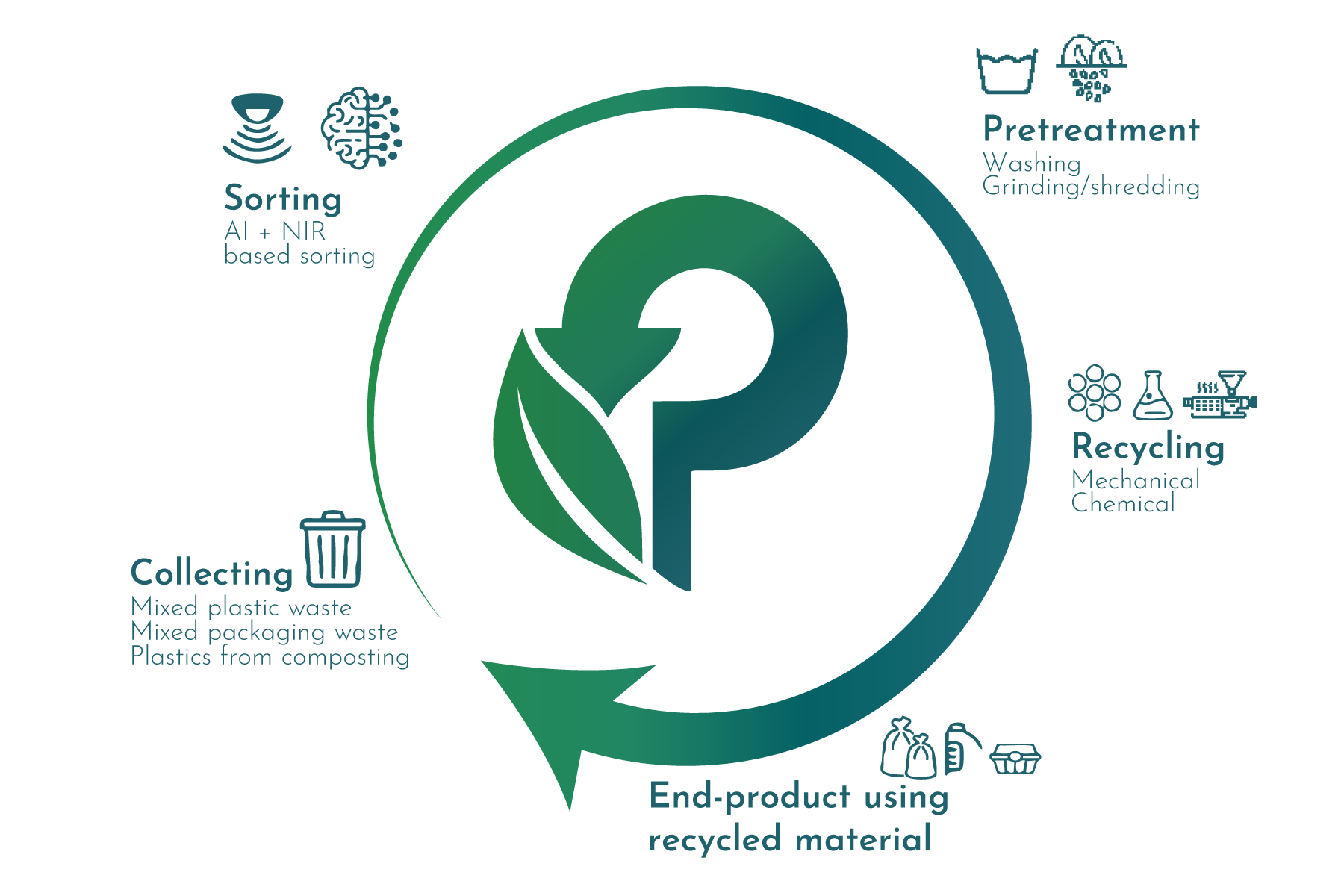
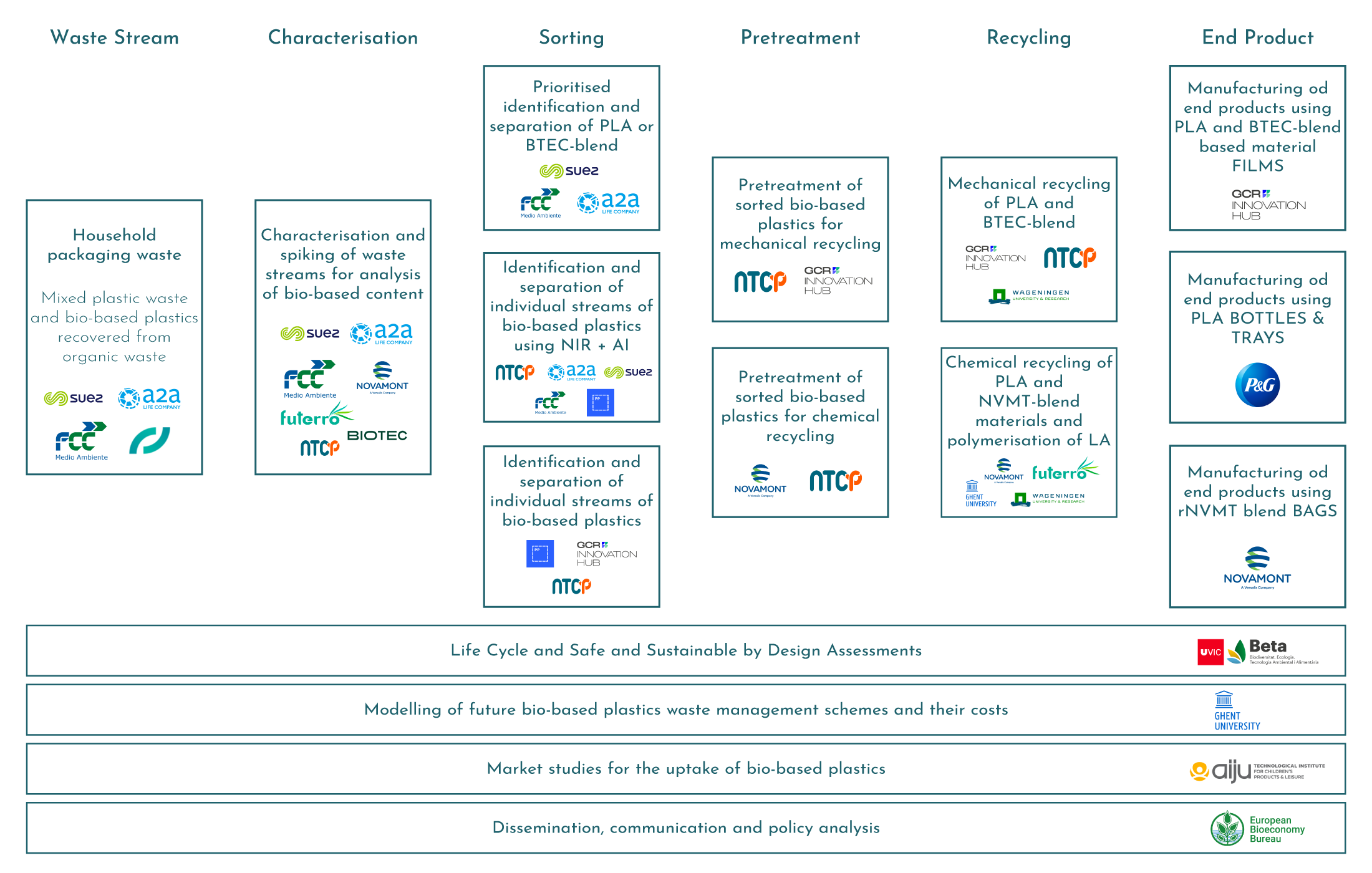
PROSPER will demonstrate sorting of bio-based plastics at 4 different waste management plants. The sites are located in Spain (FCCMA Granada), Italy (A2A) and in France (SUEZ). At the NTCP plant in the Netherlands sorting will be tested using NIR (Near Infrared) and AI assisted methods.
Before recycling, sorted bio-based plastics will undergo pre-treatment to prepare the plastic fraction for subsequent mechanical or chemical recycling processes. At NTCP, the pretreatment from shredding via washing and flake separation processes will be explored at relevant scale.
The mechanical recycling of PLA supplied from FUTERRO and bioplastic blends supplied by BIOTEC focusses on developing affordable methods to reprocess and reuse bio-based plastic cups, trays and films recovered from post-consumer household waste into new products. The process is developed by Wageningen University & Research and GCR.
The chemical recycling process will be undertaken by several partners and involve the depolymerisation of FUTERRO PLA via FUTERRO’s patented LOOPLA technology and NOVAMONT blends commonly used for bags will be undertaken by Ghent University and NOVAMONT.
Once the materials are recycled back into their polymer forms, tests designed to evaluate the suitability of the recycled polymer for reuse will be conducted at Procter & Gamble’s state-of-the-art packaging prototyping facility. AIJU will look into the consumer acceptance of such materials. CITEO will assess possibilities for EPR systems.