By Ingeborg Smeding
Project manager Recycling, Wageningen Food & Biobased Research (part of Wageningen University & Research)
As the world transitions towards a circular bio-based economy, the question is no longer whether we can replace fossil-based plastics with bio-based alternatives, but how we can ensure these materials remain in the loop as long as possible. Among bio-based polymers, polylactic acid (PLA) has become the most widely used, finding applications in packaging, food trays, disposable products, and consumer goods. To fully realize its sustainability potential, however, effective recycling strategies are essential.
Within the PROSPER project, Wageningen Food & Biobased Research (WFBR) investigated the mechanical recycling of PLA at laboratory scale to evaluate how well the material withstands repeated processing cycles and whether recycled PLA can continue to meet application requirements. The tested PLA was supplied by PROSPER consortium partner Futerro (www.futerro.com).
Testing PLA through multiple recycling loops
The study focused on virgin PLA materials that were subjected to multiple mechanical recycling cycles. Each cycle consisted of three key steps:
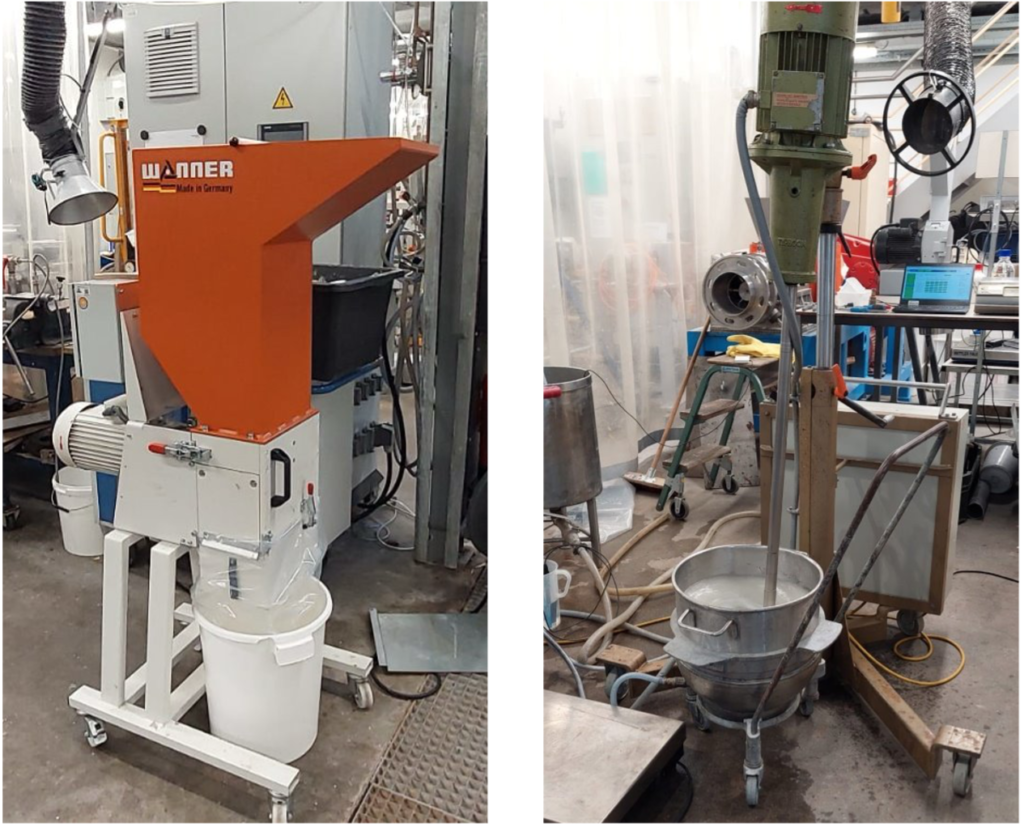
- Pretreatment, including shredding and hot caustic washing;
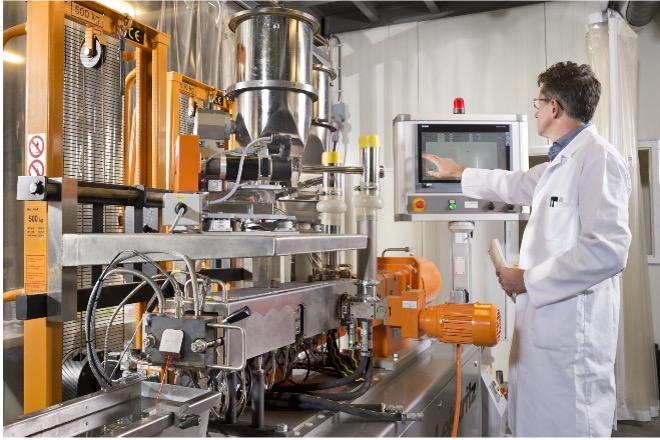
2. Extrusion, where the material was melted and reprocessed;
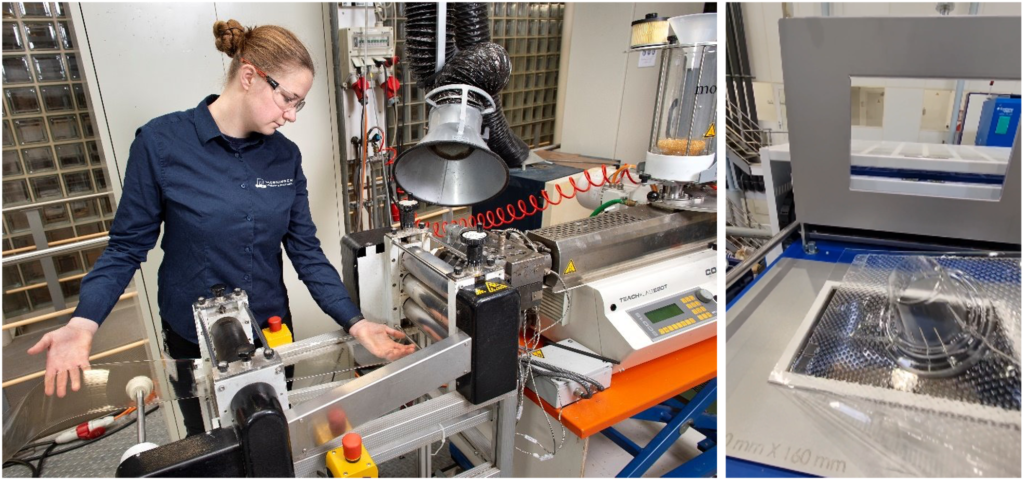
3. Product manufacturing, involving sheet extrusion followed by thermoforming into trays.
To understand how the material changed during recycling, we monitored key indicators such as melt flow index (MFI) and molecular weight. Measurements were taken after each processing step in the first cycle and again after completion of the second and third recycling cycles.
Processing conditions matter
One of the first findings was that PLA can be successfully reprocessed through extrusion without significant loss of molecular weight, provided that processing conditions are carefully controlled.
However, the research also confirmed two challenges in PLA processing:
- Too high processing temperatures accelerate degradation.
- Insufficient drying before processing leads to degradation, reducing molecular weight and material performance.
These results highlight the importance of proper process management to maintain the quality of recycled PLA.
How does PLA hold up after three recycling cycles?
Both PLA grades investigated showed a gradual decrease in molecular weight over the course of three mechanical recycling loops. This indicates that some degradation inevitably occurs during repeated processing.
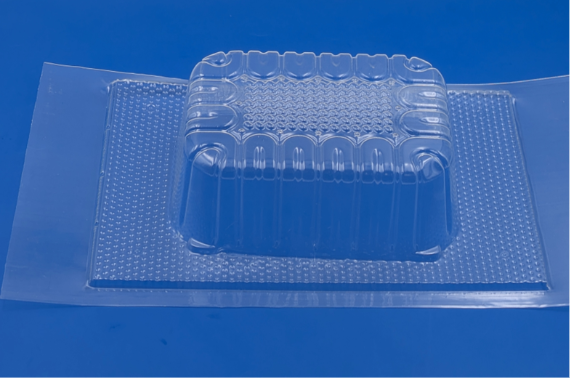
Yet the most significant finding was not the observed degradation itself, but rather its limited impact on processability. Even after completing the third recycling cycle, both PLA grades could still be converted into thermoformed products using exactly the same production settings as used for the virgin material. No adjustments to the processing conditions were required.
The resulting trays remained clear and transparent, as can be seen in the image below. This is encouraging because the washing procedure applied in the trials was based on the industrially relevant process commonly used for PET trays. The material proved remarkably robust throughout the recycling process.
These findings provide strong evidence that PLA is technically compatible with existing mechanical recycling approaches.
Mechanical performance remains intact
Mechanical testing was performed on the extruded PLA sheets before thermoforming during every recycling cycle. Although molecular weight gradually decreased slightly, the key mechanical, optical and mechanical properties remained essentially unchanged. The stability of these properties demonstrates that the structural integrity of the material was maintained despite repeated reprocessing.
A promising route towards circular PLA packaging
The PROSPER project demonstrates that PLA has considerable potential for mechanical recycling, as long as it is processed under the right conditions. Despite measurable reductions in molecular weight after repeated processing, the material remained processable, retained its transparency, and maintained its mechanical performance through three recycling cycles.
The project is supported by the Circular Bio-based Europe Joint Undertaking and its members under grant agreement Nº 101157907. Funded by the European Union. Views and opinions expressed are however those of the author(s) only and do not necessarily reflect those of the European Union or CBE JU. Neither the European Union nor the CBE JU can be held responsible for them.